


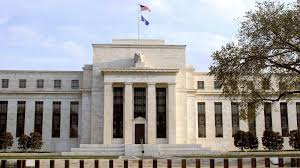
US Fed
Table of Contents
The U.S. Federal Reserve (Fed) recently decided to keep its benchmark interest rate unchanged at 4.25% to 4.50%. This move has significant implications for the economy, financial markets, and monetary policy direction moving forward. The Fed also signaled that it may reduce rates twice in 2025, a pivotal moment in its ongoing efforts to balance inflation control and economic growth. Below are the five key highlights from the Fed’s recent announcement.
1. Decision to Hold Rates Steady at 4.25%-4.50%
The Federal Open Market Committee (FOMC), the policy-making arm of the Fed, opted to keep the target range for the federal funds rate between 4.25% and 4.50%. This rate has been in place since December 2022 as part of the Fed’s strategy to combat high inflation. The decision to hold the rates steady reflects the Fed’s cautious approach, aiming to assess the effects of its previous interest rate hikes while avoiding overly restricting the economy.
The rationale behind this decision is rooted in the current economic conditions, which are showing mixed signs. On one hand, inflation has been coming down, with consumer price indices showing moderation. However, core inflation, which excludes volatile food and energy prices, remains persistently above the Fed’s 2% target. At the same time, there are concerns about slowing economic growth, which could potentially lead to a recession if the Fed continues to raise rates aggressively.
This decision to hold rates steady indicates that the Fed is adopting a more patient stance, awaiting more data to determine the trajectory of inflation and the overall economic outlook. It suggests that the central bank may be reaching the end of its rate-hiking cycle, but remains cautious about prematurely easing policy.
2. Signaling Two Rate Reductions in 2025
In addition to holding rates steady, the Federal Reserve also signaled that it expects to implement two rate cuts in 2025. This marks a significant shift in the Fed’s outlook compared to previous statements, as many market participants had been uncertain about when the Fed would pivot toward rate cuts.
The two planned reductions reflect the Fed’s forecast that inflation will continue to moderate, and that economic conditions may warrant easing monetary policy. The central bank’s projections suggest that by 2025, inflation will approach or reach its 2% target, and the economy will have enough momentum to support lower rates. Additionally, lower interest rates may become necessary to stimulate growth if inflation is sufficiently under control and economic activity begins to slow.
The Fed’s decision to forecast these rate reductions is also a sign of its confidence in the economy’s resilience, despite the current rate levels. The central bank is signaling that it expects to navigate through this challenging inflationary period and transition to a more accommodative monetary policy in the near future, assuming inflation remains on its downward path.
3. Focus on Inflation and Economic Growth Balance
The Federal Reserve’s primary mandate is to ensure price stability (low inflation) and maximum sustainable employment. In its most recent meeting, the Fed emphasized that it would continue to prioritize inflation control, even as it remains vigilant about potential negative effects of its tightening cycle on economic growth.
As inflation has gradually eased from its peak levels of 2022, the central bank remains committed to bringing it back to the 2% target. While there are signs of inflation moderating, including slower price growth in key categories like energy and food, the Fed remains focused on the core inflation rate, which has proven more stubborn.
However, the Fed also appears cognizant of the potential risks of further rate hikes. Rising borrowing costs are already having a significant impact on various sectors of the economy, including housing, consumer spending, and business investments. The Fed’s goal is to avoid pushing the economy into a recession while achieving its inflation targets, which is why it is signaling a potential reduction in rates over the next few years.
The balance between inflation control and economic growth will continue to be a delicate issue for the Fed, as any misstep could have lasting effects on both the job market and economic stability. With the signal of rate reductions in 2025, the Fed seems to be aiming for a soft landing: a situation where inflation is under control, and economic growth continues, but at a more sustainable pace.
4. Market Reactions and Projections
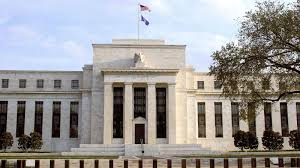
The Fed’s decision and forward guidance have had significant effects on financial markets. Following the announcement, bond markets reacted with expectations of easing rates, with the yield curve beginning to reflect potential rate cuts in 2025. Stocks also saw positive movements, as lower interest rates typically benefit equity markets by lowering borrowing costs and increasing investor confidence.
However, the Fed’s projections also highlighted uncertainty regarding the timing and pace of rate reductions. Financial markets and analysts are still closely watching inflation data and economic indicators to gauge how soon the central bank might begin reducing rates. The projected rate cuts in 2025 indicate that the Fed expects economic conditions to improve enough to warrant a more accommodative policy stance.
Markets are particularly interested in the Fed’s upcoming economic projections, which could reveal more information about the central bank’s timeline for rate cuts. Should inflation remain persistent or economic conditions worsen, the Fed might reassess its approach. This level of uncertainty keeps markets on edge, though investors seem relatively optimistic in light of the Fed’s forward guidance.
5. Risks and Challenges Ahead for the Fed
Despite the relatively positive signals from the Fed’s announcement, the central bank faces several risks and challenges in the coming months. First, inflation remains a concern. Although price growth has slowed, core inflation is still significantly above the Fed’s 2% target. Any resurgence in inflation, driven by supply chain disruptions or other external shocks, could force the Fed to delay or even reverse its plans for rate cuts.
Second, the global economic environment poses risks to the U.S. economy. Geopolitical tensions, energy price fluctuations, and the potential for global economic slowdowns could have unforeseen impacts on U.S. inflation and economic growth. If inflation remains high due to external factors, the Fed might find it difficult to lower rates as it has projected.
Finally, there is the possibility of financial instability. After years of low interest rates, the U.S. economy has grown accustomed to cheap credit. Should the Fed lower rates too quickly or prematurely, it could create asset bubbles or increase leverage in risky sectors of the economy. This could potentially lead to financial instability down the line.
In conclusion, the Federal Reserve’s decision to hold interest rates steady while signaling potential rate reductions in 2025 is a reflection of its cautious optimism. The central bank is committed to ensuring that inflation continues to decline while ensuring that economic growth remains stable. However, the risks of inflationary pressures and global economic uncertainties remain, making the path forward for the Fed a delicate balancing act. The market will closely monitor upcoming economic data and the Fed’s actions to determine the likely trajectory of interest rates in the coming years.


