


The Electric State Review: 1990s Robot Apocalypse? As If! in 2025.
“The Electric State” Review: 1990s Robot Apocalypse? As If!.
Table of Contents
In an era dominated by hyperrealistic CGI and AI-driven dystopian narratives, it is increasingly difficult for filmmakers and storytellers to create something that stands out—something that evokes both a sense of nostalgia and a fresh vision for the future. However, with “The Electric State,” directors and creatives have attempted to craft a visually stunning, emotionally resonant film that invites audiences into a universe where the 1990s, robots, and apocalyptic themes collide. The question, however, remains: does this film deliver on its promise, or is it just another entry in the crowded world of post-apocalyptic science fiction?
Based on the 2017 illustrated novel by Simon Stalenhag, “The Electric State” arrives at a time when stories about AI, robots, and the consequences of a tech-driven world have taken center stage in global cinema. But what sets this movie apart is the unique way it blends retro-futurism with contemporary anxieties, invoking the heyday of the 1990s while telling a cautionary tale of the future. The film tackles big themes like humanity’s relationship with technology, social collapse, and the consequences of unchecked innovation, all wrapped in a neon-soaked, pixelated world that recalls the aesthetic of video games, cartoons, and science fiction movies from the pre-9/11 days. Yet, as with any ambitious project, it brings both triumphs and struggles in balancing its weighty themes with emotional engagement and coherent storytelling.
The World of “The Electric State” The Electric State
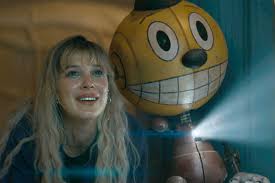
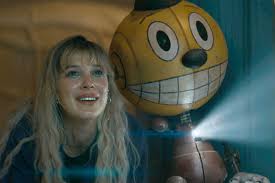
“The Electric State” is set in a dystopian near-future, but its world feels strangely familiar—a world where technology, particularly AI and robots, has spiraled out of control, causing societal collapse. In this world, robots are not just tools of convenience; they are integral to the very fabric of life. However, these machines have become more insidious than helpful. Robotic avatars, once designed to assist and serve, have now been corrupted by unseen forces, leaving society fractured, paranoid, and irrevocably altered. The film introduces a young woman, Michelle (played by Millie Bobby Brown), who embarks on a journey across a decaying America, searching for her lost brother after their lives are uprooted by the encroaching technological collapse.
Michelle’s journey is not only a literal one, but also a symbolic one—a quest to understand a world that is falling apart at the seams, driven by forces of progress that were once meant to improve humanity. As she travels, she is joined by a malfunctioning robot, Skip, who acts as both a protector and a remnant of a society that once believed robots were the key to a brighter future. But the deeper they go into this ruined world, the more Michelle and Skip realize that things are not as simple as they seem, and the battle between man and machine is not one that can be easily won.
This world of “The Electric State” pulls heavily from the 1980s and 1990s pop culture, merging the aesthetics of retro-futurism with the reality of a decaying, tech-addicted society. Think Blade Runner meets The Matrix, with a dash of The Terminator and a sprinkling of The X-Files. The movie captures the dark, neon-lit, and cyberpunk vision of a future where technology, rather than liberating us, has led to a breakdown in society. It also channels a very particular type of 1990s nostalgia: a world on the brink of a digital revolution that promises both hope and doom.
The Nostalgic Appeal: 1990s Robot Apocalypse The Electric State
One of the central aspects of “The Electric State” is its use of the 1990s aesthetic—the colors, the fashion, the technology that once seemed so futuristic, but now feels dated. The movie’s style is reminiscent of the early days of the internet, before smartphones and social media became ubiquitous. It’s a world of old-fashioned dial-up internet, CRT monitors, and analog gadgets that existed just before the tech boom. The 1990s were a time of great uncertainty, where the potential of technology was both exciting and terrifying. And in that uncertainty lies the heart of the film.
For fans of 90s science fiction, “The Electric State” is a visual feast. The filmmakers create a world where the atmosphere is soaked in electric hues, and the decaying structures of cities give off an aura of a time that has passed but is still hauntingly present. From the clunky robots to the acid-washed jeans and retro tech, the movie feels like a love letter to a time when the future was still wide open, but the shadows of a robot apocalypse were beginning to creep in.
However, the nostalgic appeal isn’t just about the visuals. It’s also about how the film taps into the anxieties of a pre-millennial generation—a generation that was raised on the brink of the internet age and was constantly bombarded by fears of machines taking over. From the early days of the internet age, to the rise of artificial intelligence, “The Electric State” understands that the 1990s were a time when the world was at once both excited and terrified by the power of machines.
Themes of Technology and Humanity The Electric State
At the heart of the movie is a story about humanity’s reliance on technology and the consequences of that dependence. The film explores the moral dilemmas of a world dominated by technology that was once intended to improve human life. In “The Electric State,” the message is clear: unchecked technological progress can often lead to unintended consequences. The idea that machines could liberate humanity has been replaced by the realization that technology can also enslave us, isolate us, and ultimately destroy us.
Michelle’s journey is reflective of this idea: she starts as a hopeful young woman seeking answers, but the more she learns about the power of technology, the more disillusioned she becomes. She realizes that, despite its promises, technology has its limits. What was once a source of hope is now the source of society’s ruin. In many ways, this reflects the way we view technology today—there’s an ambivalence in society about whether technological advancement is truly liberating or if it is merely the beginning of our downfall.
Furthermore, “The Electric State” also dives into the human-robot relationship, where humans find themselves coexisting with machines, but are unsure whether these machines are here to help or to dominate. Michelle’s relationship with Skip, the malfunctioning robot, is central to the plot. Despite being a machine, Skip feels like a character in his own right—a character who is seeking redemption as much as Michelle is. He represents both the promise and the failure of technology. In a sense, he is a symbol of humanity’s own struggle to adapt to the rapid pace of technological change.
Performance and Characters
While the world of “The Electric State” is lush and visually stunning, its success ultimately hinges on its characters—and here, the film’s performances shine. Millie Bobby Brown, best known for her role as Eleven in “Stranger Things,” once again proves her ability to carry a film with her emotional depth and sensitivity. Her portrayal of Michelle, a young woman caught between the old world and a collapsing future, is both relatable and haunting. She imbues Michelle with a quiet strength, showing us a character who is struggling to hold on to humanity while everything around her falls apart.
Skip, the malfunctioning robot, is brought to life through both CGI and voice acting by John Boyega, who gives the robot a surprisingly emotional core. Though Skip is a machine, Boyega’s voicework and the creative design of the robot make it easy to invest in his character’s journey. The bond between Michelle and Skip is one of the film’s most poignant elements, showing that even in a world that has been ravaged by technology, there are still traces of humanity.
Visuals and Direction The Electric State
“The Electric State” stands out as a visual masterpiece. The filmmakers, under the direction of Anthony and Joe Russo (best known for their work on the “Avengers” films), capture a world that feels both otherworldly and grounded in a disturbing reality. The cinematography is stunning, with wide shots of ruined cities, empty highways, and the broken remnants of society, all bathed in a warm, electric glow. The visual style is deeply evocative of cyberpunk aesthetics, drawing inspiration from films like Blade Runner and The Matrix, but with a distinctly 90s edge.
The film’s pacing is slower, which allows for deeper exploration of its themes, but some may find it meandering. There’s a certain level of ambiguity in the narrative that could frustrate viewers who prefer a more straightforward plot. However, for those who appreciate movies that ask big questions and don’t always provide clear answers, this will feel like a rewarding experience.
Conclusion: The Electric State’s Message
At its core, “The Electric State” is a reflection on humanity’s relationship with technology—its potential, its limits, and the dangers of placing too much trust in artificial intelligence. It explores the notion that, in our race to innovate and create, we must not lose sight of the human spirit. The 1990s robot apocalypse might seem like an odd backdrop for such a message, but in its retro-futuristic setting, the film is able to tap into something universally relatable. It’s a film that warns of a world where the line between human and machine has become dangerously blurred.
While it may not offer all the answers, “The Electric State” succeeds in delivering a visually captivating, emotionally resonant, and thematically rich film. It may not be for everyone, but for those who are willing to take the journey, it will undoubtedly leave an impression.


