


Table of Contents
At Riyadh Summit, Saudi Crown Prince Backs Iran, Accuses Israel of Genocide in Gaza
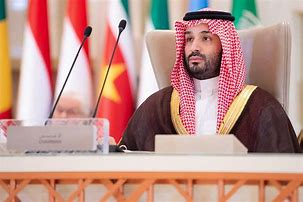
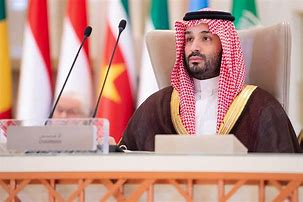
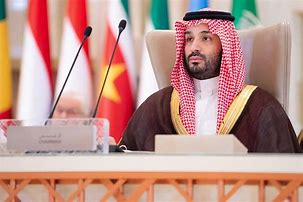
In a landmark speech at the Riyadh Summit, Saudi Crown Prince Mohammed bin Salman (MBS) made waves across the international community by delivering a bold denunciation of Israel’s actions in Gaza, accusing the country of committing “genocide.” In a particularly significant diplomatic move, he also expressed Saudi Arabia’s increasing support for Iran in the context of regional stability. These remarks mark a dramatic shift in the kingdom’s foreign policy, underscoring the complexities of Middle Eastern geopolitics and signaling a potential new phase in Saudi Arabia’s strategic alignments.
The summit, which convened leaders from various countries, was held amid the ongoing Israel-Hamas conflict and growing tensions in the Middle East. MBS’s comments have sent ripples throughout the region and beyond, as they touch on two of the most volatile issues in contemporary Middle Eastern diplomacy: the Israeli-Palestinian conflict and Saudi-Iran relations. With his remarks, the Saudi Crown Prince has effectively repositioned Saudi Arabia’s diplomatic stance, aligning it more openly with Iran, which has been a long-standing rival of Saudi Arabia in the region, while also condemning Israel’s military operations in Gaza.
MBS’s Bold Accusation of ‘Genocide’ in Gaza
The Crown Prince’s statement accusing Israel of committing “genocide” in Gaza is a significant escalation of Saudi rhetoric regarding the ongoing conflict between Israel and Hamas. The use of the term “genocide” is not only highly inflammatory but also legally charged, as it invokes the specter of one of the most serious crimes under international law. Genocide refers to the deliberate attempt to destroy a particular ethnic, racial, or religious group through mass killings, causing serious bodily or mental harm, and inflicting conditions designed to bring about the group’s physical destruction.
The Saudi Crown Prince’s remarks represent a departure from the traditionally cautious and pragmatic foreign policy stance that Saudi Arabia has long maintained on the Israel-Palestine conflict. While the Kingdom has historically supported the Palestinian cause, it has also pursued diplomatic and economic relations with Israel in recent years, particularly in light of shared regional concerns over Iran’s influence. However, the brutal military escalation in Gaza, coupled with international outcry over the humanitarian crisis, appears to have led MBS to make a more forceful, anti-Israel statement. His use of the term “genocide” will likely draw sharp reactions from Israel and its allies, but it will also resonate deeply with the Arab and Muslim world, where support for Palestinians remains a critical political issue.
Saudi Support for Iran: A Changing Regional Dynamic
Perhaps even more surprising than his comments on Israel was MBS’s growing alignment with Iran, the Kingdom’s long-standing regional rival. Saudi Arabia and Iran have been locked in a bitter geopolitical struggle for decades, with both nations vying for influence in the Middle East and supporting opposing sides in various regional conflicts. From the wars in Yemen and Syria to the broader Sunni-Shia divide, the rivalry between Riyadh and Tehran has shaped the political landscape of the region.
However, in his Riyadh speech, MBS appeared to back Iran’s position on certain key regional issues, including the situation in Gaza. This marks a significant shift in Saudi Arabia’s policy, particularly considering that Saudi Arabia has long been one of the most vocal critics of Iran’s involvement in regional conflicts. MBS has made his intentions clear in recent years to modernize Saudi Arabia’s foreign policy, seeking to recalibrate relations with Iran while also exploring new partnerships with Israel and the West.
This shift is likely to be driven by several factors, including the growing frustration with Israel’s actions in Gaza and the broader desire for regional stability. As the Middle East becomes increasingly polarized over the Israeli-Palestinian conflict, Saudi Arabia may have determined that aligning more closely with Iran—particularly in opposition to Israel—could be a way to enhance its standing in the Arab and Muslim world. At the same time, Saudi Arabia’s increasing openness to diplomacy with Iran could help stabilize the region, which has been riven by sectarian conflict, proxy wars, and rising tensions.
Despite the tension between the two nations, there have been signals of a thaw in relations in recent years. Saudi Arabia and Iran have held back-channel talks, with both sides recognizing the need to de-escalate regional conflicts, especially in places like Yemen, where the two countries have supported opposing factions in a devastating civil war. The idea of building a more cooperative relationship with Iran, rather than continuing the endless cycle of confrontation, may now be more appealing to MBS, who is trying to maintain Saudi Arabia’s leadership role in the Middle East while simultaneously managing the kingdom’s domestic transformation.
A Turning Point in Middle Eastern Diplomacy
MBS’s speech marks a clear turning point in Middle Eastern diplomacy, especially as it pertains to Saudi Arabia’s relationships with both Israel and Iran. For decades, Saudi Arabia has maintained a delicate balance of supporting the Palestinian cause while avoiding a direct confrontation with Israel. The Kingdom has quietly pursued covert ties with Israel, driven by shared concerns about Iran, but those relations have remained largely out of the public eye. However, the Crown Prince’s latest comments reveal how the ongoing violence in Gaza and shifting regional alliances are reshaping the Kingdom’s approach to international diplomacy.
The relationship between Saudi Arabia and Iran, once defined by hostility and rivalry, appears to be moving toward a more pragmatic coexistence. The two countries may not yet be on the brink of forming an official alliance, but the Crown Prince’s willingness to back Iran—at least on issues related to Israel and Gaza—signals a desire for greater cooperation. Saudi Arabia’s shift could lead to greater collaboration with Iran in resolving regional conflicts, particularly in Yemen, where both nations have supported opposing sides for years. The message from Riyadh may also embolden other Arab nations to reconsider their diplomatic relationships with both Israel and Iran, potentially leading to new alliances and partnerships across the region.
At the same time, Saudi Arabia’s increasingly vocal criticism of Israel, particularly on the issue of Gaza, has significant implications for the broader Arab world. MBS’s remarks are likely to resonate with a population that has long supported Palestinian independence and sovereignty, and his public alignment with Iran could elevate his status as a leader who is willing to take a stand against Israel’s actions. In many ways, his remarks represent a rebuke to Arab leaders who have quietly aligned themselves with Israel through the Abraham Accords and other regional security initiatives.
The Global Reactions: A Divisive Moment
MBS’s comments have already elicited a range of reactions from the international community. Israel, unsurprisingly, has rejected the accusations of genocide, defending its actions in Gaza as a necessary response to Hamas’s terrorism and threats to Israeli security. Israeli officials have emphasized that they are targeting Hamas operatives and infrastructure, while seeking to minimize civilian casualties. However, the rhetoric from Saudi Arabia and other Arab nations will likely increase pressure on Israel to justify its military tactics and to seek a more peaceful resolution to the conflict.
From the United States and European Union, the response has been more measured. While both the U.S. and the EU have called for restraint in Gaza and have expressed concerns about civilian casualties, they have also reaffirmed Israel’s right to defend itself against Hamas’s attacks. These global powers face a difficult balancing act, as they attempt to support Israel’s security needs while also responding to widespread criticism of the humanitarian crisis in Gaza.
On the other hand, the support Saudi Arabia has shown for Iran is likely to complicate its relationship with the West. Saudi Arabia, which has long enjoyed a strategic alliance with the U.S., may now find itself caught between its growing ties with Iran and its historical partnership with Washington. The Biden administration, which has sought to reinvigorate the Iran nuclear deal and engage diplomatically with Tehran, may view Riyadh’s warming relations with Iran as a positive development. However, the alignment with Tehran on the issue of Gaza, coupled with Saudi Arabia’s condemnation of Israel, could strain ties with its Western allies.
Conclusion: The Future of Saudi Foreign Policy
In his Riyadh Summit address, Crown Prince Mohammed bin Salman’s comments on Israel and Iran represent a dramatic recalibration of Saudi Arabia’s foreign policy. His condemnation of Israel’s actions in Gaza as “genocide” underscores the deepening humanitarian crisis in the Palestinian territories and reflects the changing dynamics in the Arab world. At the same time, Saudi Arabia’s increasing openness to Iran, particularly on regional security issues, marks a potential turning point in the kingdom’s diplomatic strategy.
As Saudi Arabia navigates these evolving alliances, the region will be watching closely to see how the kingdom balances its support for Palestine with its long-standing ties to the West. MBS’s remarks have the potential to reshape Middle Eastern geopolitics in the years to come, signaling a shift away from traditional alliances and toward a more complex and multipolar regional order.


