


Nowruz
Nowruz 2025: Traditions, Haft-Sin, and Celebrations of the Persian New Year
Nowruz, the Persian New Year, is one of the most significant cultural and spiritual celebrations observed not only in Iran but also in many countries across Central Asia, the Caucasus, and beyond. Celebrated on the Spring Equinox, usually falling between March 20th and 21st, Nowruz heralds the arrival of spring and the rejuvenation of nature. It marks a fresh start, a time of renewal, and is deeply rooted in ancient customs, bringing together families and communities to celebrate with joy, love, and gratitude.
Nowruz, which translates to “new day” in Persian, is not just the beginning of the year in the Persian calendar, but it also symbolizes the restoration of life. It is the day when the sun crosses the celestial equator and day and night become equal. This event carries deep cultural and spiritual significance, symbolizing the victory of light over darkness and the start of a new cycle in nature. The traditions, customs, and rituals associated with Nowruz have been passed down through generations and are celebrated with great enthusiasm across different regions.
The History and Significance of Nowruz
Nowruz dates back over 3,000 years to the ancient Zoroastrian tradition, which was the dominant religion in Persia (modern-day Iran) before the advent of Islam. The ancient Persians celebrated Nowruz as the beginning of spring, symbolizing rebirth, the renewal of nature, and the victory of good over evil. Over time, Nowruz became a cultural and social event that transcended religious boundaries, uniting people of different faiths and backgrounds.
In 2010, the United Nations officially recognized Nowruz as an international holiday, acknowledging its cultural significance and the shared traditions across many countries. It is celebrated in various regions, including Iran, Afghanistan, Azerbaijan, the Caucasus, Central Asia, Turkey, and parts of the Middle East and South Asia.
Nowruz Traditions and Customs
1. Spring Cleaning (Khaneh Tekani)
Before the arrival of Nowruz, it is customary to perform a thorough spring cleaning, known as “Khaneh Tekani” (house shaking). This tradition is seen as a way to rid oneself of the old and make space for the new. Homes are thoroughly cleaned, and people throw away things that are no longer needed. This symbolizes a fresh start, both in the physical environment and in one’s life.
2. The Haft-Sin Table
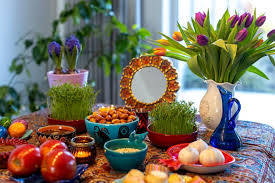
One of the most iconic and symbolic traditions of Nowruz is the creation of the Haft-Sin table. “Haft” means seven, and “Sin” refers to the Persian letter “S”. The Haft-Sin is a table decorated with seven items, each beginning with the letter “S” in Persian, which symbolize different aspects of life and nature. These seven items are:
- Sabzeh (سبزه) – Sprouted wheat, barley, or lentils, symbolizing rebirth and the renewal of nature.
- Samanu (سمنو) – A sweet pudding made from wheat germ, symbolizing power and strength.
- Senjed (سنجد) – Dried oleaster fruit, symbolizing love.
- Seer (سیر) – Garlic, symbolizing medicine and health.
- Seeb (سیب) – Apples, symbolizing beauty and good health.
- Somāq (سماق) – Sumac berries, symbolizing the sunrise and the patience of life.
- Serkeh (سرکه) – Vinegar, symbolizing aging, wisdom, and patience.
In addition to these seven items, other objects may also be included on the table, such as:
- Sham’ (شمع) – Candles, symbolizing light and happiness.
- Mirror (آینه) – A mirror, symbolizing reflection and self-awareness.
- Goldfish (ماهی قرمز) – A symbol of life and vitality.
- Coins (سکه) – Representing wealth and prosperity.
- Hyacinth (سنبل) – A flower symbolizing the arrival of spring and new life.
- Quran – A symbol of spirituality and blessing, often placed on the table as a sign of respect for faith and religion.
The Haft-Sin table is not just a physical arrangement of items; it is a reflection of the deep spiritual connection that Iranians and other Nowruz celebrants have with nature, health, wisdom, love, and prosperity. The table is typically set in the days leading up to Nowruz and remains in place for the first days of the new year.
3. Chaharshanbe Suri (Fire Jumping)
One of the most exciting and energetic traditions of Nowruz is Chaharshanbe Suri, which takes place on the last Wednesday night before Nowruz. This custom involves jumping over bonfires to purify oneself from evil and misfortune. The act of jumping over fire symbolizes burning away the negativity, illness, and bad luck from the past year and embracing a new, prosperous future.
People gather in the streets and parks to light fires, and each person takes turns jumping over the flames while chanting phrases like, “Zardie man az to, sorkhie to az man,” which translates to “My paleness is yours, your redness is mine,” signifying the exchange of vitality and health.
4. The First Visitor (Sofreh Araz)
The first person to visit a household after Nowruz is often considered to bring good luck and blessings for the year ahead. The first visitor, or “Sofreh Araz,” is chosen based on their qualities, and many families invite someone they consider to be wise, prosperous, or virtuous to enter their home first. This visitor is typically served sweets and special treats, and their arrival is thought to bring positivity into the home.
5. Visiting Family and Friends
Nowruz is a time for family reunions and visiting friends. It is common for people to pay visits to relatives, neighbors, and friends during the first few days of the new year. These visits are filled with well-wishes, gift-giving, and sharing meals. Traditional foods such as “Sabzi Polo Mahi” (herbed rice with fish) and “Reshteh Polo” (noodles with rice) are often prepared for the occasion.
6. New Clothes and Gifts
It is customary for people to wear new clothes for Nowruz, symbolizing a fresh start. People often buy new outfits in preparation for the new year, and children are often gifted money or treats, which are placed in their pockets or purses to bring good fortune.
Nowruz Celebrations Around the World
While Nowruz originates from Iran, it is celebrated by millions of people around the world, each with their own unique customs and interpretations of the holiday. In countries like Afghanistan, Azerbaijan, Kazakhstan, Tajikistan, and Turkey, Nowruz is an official public holiday, and people take part in large community celebrations that include music, dancing, feasting, and fireworks. In Iran, Nowruz lasts for about two weeks, with various festivals and ceremonies taking place across the country.
In Azerbaijan, people celebrate with large-scale public events, featuring folk dances, music, and performances. In Central Asia, Nowruz is celebrated with street festivals, sports competitions, and traditional dances. In some parts of India and Pakistan, particularly in regions with Persian influence, Nowruz is celebrated with vibrant cultural performances and gatherings.
Conclusion
Nowruz is more than just a new year; it is a celebration of life, renewal, and community. The traditions of Haft-Sin, Chaharshanbe Suri, and other customs are a testament to the rich cultural heritage of the Persian New Year and its importance in shaping the values of love, family, and respect for nature. As we celebrate Nowruz 2025, it is a time to reflect on the past year, cherish the present moment, and look forward to new beginnings with hope and joy. Whether you’re in Iran, Central Asia, or anywhere else in the world, Nowruz unites people in the spirit of renewal and the beauty of spring.


