


Table of Contents
Virat Kohli vs Rachin Ravindra: Who Has the Better Record After 30 ODIs?
In the modern era of cricket, two players who have caught the attention of fans and analysts alike are Virat Kohli of India and Rachin Ravindra of New Zealand. Virat Kohli, a name synonymous with consistency and world-class batting, has enjoyed a stellar career since his ODI debut in 2008. On the other hand, Rachin Ravindra, a young all-rounder for New Zealand, has been making waves in international cricket since his debut in 2021. While Kohli’s career has been well-established, Ravindra is still in the early stages of his journey but has already shown significant promise.
When comparing the two players after their first 30 ODIs, there are many aspects to consider: batting performance, consistency, versatility, and overall impact on their respective teams. While Virat Kohli is regarded as one of the greatest batsmen in the history of ODI cricket, Rachin Ravindra’s dual-role as an all-rounder makes for a more intriguing comparison. Let’s delve deeper into their records after 30 ODIs and evaluate who has had the better start to their careers.
Virat Kohli’s ODI Career: A Monumental Beginning
Virat Kohli’s ODI journey began in 2008 during an ODI series against Sri Lanka. However, his breakthrough moment came during the 2011 World Cup, when he played a pivotal role in India’s triumph. Kohli has always been known for his consistency, adaptability, and ability to perform under pressure. His approach to the game, particularly in run-chases, has made him a modern ODI legend. After 30 ODIs, Kohli had already shown glimpses of his immense talent, which would soon become the hallmark of his career.
Virat Kohli’s Stats After 30 ODIs:
- Matches Played: 30
- Innings: 29
- Runs: 1,269
- Batting Average: 52.87
- Strike Rate: 85.21
- 100s: 3
- 50s: 6
- Highest Score: 107
- Batting Position: Primarily No. 3
Kohli’s start to his ODI career was impressive. He scored 1,269 runs in his first 30 matches, with an average of 52.87, which is outstanding for a player still finding his feet in international cricket. His strike rate of 85.21 reflects his ability to play with both fluency and aggression, while his three centuries and six half-centuries in his first 30 matches set the stage for what would become one of the greatest ODI careers ever. His ability to adapt to different match situations—whether anchoring an innings or accelerating the scoring rate—was evident even in the early stages of his career.
Kohli’s first 30 ODIs were instrumental in shaping his reputation as a player capable of producing match-winning performances. His early years laid the foundation for his status as one of the best finishers and chasers in limited-overs cricket.
Rachin Ravindra’s ODI Start: A Promising All-Rounder
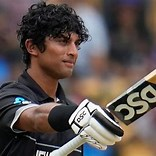
Rachin Ravindra, the 23-year-old all-rounder from New Zealand, made his ODI debut in 2021 against Bangladesh. Despite being in the nascent stages of his career, Ravindra’s all-round abilities—both as a batsman and a bowler—have already garnered significant attention. His maturity at the crease and composure in the field have drawn comparisons to seasoned players, making him one of New Zealand’s most promising young talents.
Unlike Kohli, who has been a specialist batter, Ravindra’s role as an all-rounder adds another layer to his contribution. His ability to contribute with both bat and ball makes him a valuable asset to New Zealand in the limited-overs format. Let’s take a closer look at how Ravindra has performed in his first 30 ODIs.
Rachin Ravindra’s Stats After 30 ODIs:
- Matches Played: 30
- Innings: 27
- Runs: 1,115
- Batting Average: 53.57
- Strike Rate: 83.12
- 100s: 2
- 50s: 6
- Highest Score: 105*
- Bowling Average: 38.00
- Wickets Taken: 23
- Best Bowling Figures: 3/42
Ravindra has made a solid start to his ODI career, amassing 1,115 runs at an average of 53.57. His strike rate of 83.12 is slightly lower than Kohli’s, but it reflects his more cautious approach, especially considering the role he plays in New Zealand’s middle order. Ravindra has already scored two centuries and six fifties in his first 30 ODIs, showcasing his ability to play significant innings and build partnerships. His highest score of 105* in an ODI match reflects his capability to anchor the innings and take his team to victory.
Beyond his batting, Ravindra has contributed with the ball, taking 23 wickets at an average of 38.00. His left-arm orthodox spin has added an important dimension to his game, and his ability to bowl crucial overs in the middle phase makes him a valuable all-rounder for New Zealand.
Batting Comparison: Kohli’s Superiority in Terms of Volume
When comparing the batting performances of Kohli and Ravindra after 30 ODIs, it’s clear that Virat Kohli has been the more dominant batter in terms of volume. Here are the key batting stats:
- Runs Scored: Kohli has scored 1,269 runs in his first 30 ODIs, which is significantly more than Ravindra’s 1,115 runs. Kohli’s ability to score runs consistently, especially in challenging situations, set him apart early in his career.
- Batting Average: Kohli’s average of 52.87 is higher than Ravindra’s 53.57, though the gap is marginal. While both have shown great consistency, Kohli’s ability to score big runs at a slightly higher rate during his early years is notable.
- Strike Rate: Kohli’s strike rate of 85.21 is also higher than Ravindra’s 83.12. Kohli’s ability to score quickly, particularly in the middle and end stages of innings, allowed him to put pressure on opposition teams.
- Centuries and Fifties: Kohli scored three centuries and six fifties in his first 30 ODIs, while Ravindra has scored two centuries and six fifties. Kohli’s higher century count reflects his knack for converting starts into big scores, which has been a defining feature of his career.
Kohli’s early career was marked by his ability to anchor the innings and play match-winning knocks. His technique, composure, and ability to chase down big totals made him one of the best ODI batsmen in history.
All-Rounder Advantage: Ravindra’s Extra Dimension
While Kohli is undoubtedly one of the best pure batsmen the world has ever seen, Rachin Ravindra brings an extra dimension to the table as an all-rounder. His ability to contribute with both bat and ball gives him a greater degree of versatility compared to Kohli, who is a specialist batter.
- Bowling: Ravindra’s 23 wickets in his first 30 ODIs, with a bowling average of 38.00, highlight his role as a key contributor with the ball. His ability to bowl economically and take wickets in the middle overs provides significant value to the New Zealand team. In contrast, Kohli does not bowl in ODIs, which limits his overall impact in this regard.
- Batting and Bowling Impact: Ravindra’s ability to balance both batting and bowling has made him a more complete player than Kohli, who is solely a batter. This aspect of Ravindra’s game allows New Zealand to benefit from his contributions in multiple facets of the game, giving him an edge in terms of overall team balance.
The Verdict: Who Has the Better Record After 30 ODIs?
After comparing the records of Virat Kohli and Rachin Ravindra after 30 ODIs, it’s evident that Virat Kohli had the better start in terms of batting performance. Kohli’s higher number of runs (1,269), centuries (3), and strike rate (85.21) set him apart as one of the best young ODI batsmen in the world.
However, Rachin Ravindra has been impressive in his own right, especially considering that he is an all-rounder. His batting average of 53.57 is similar to Kohli’s, and his bowling contributions—with 23 wickets—have added significant value to New Zealand’s team balance. Ravindra’s ability to bowl makes him a more versatile player, adding to his overall impact.
While Virat Kohli’s batting dominance makes him the standout performer after 30 ODIs, Ravindra’s early record as an all-rounder sets him on a promising path. His all-round skill set provides a level of completeness that Kohli, as a specialist batter, does not have.
In conclusion, Kohli had the better start in terms of pure batting, while Ravindra’s all-round abilities make his start equally impressive from a team perspective. The difference is that Kohli’s batting consistency and match-winning ability put him on a path to greatness, while Ravindra’s all-round potential makes him a player to watch for the future.


