


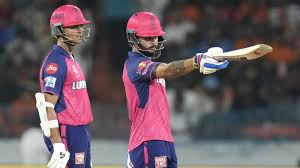
Jaiswal
Table of Contents
“Jaiswal is killing his career, will end up like Pujara”: Riyan Parag Captaincy Call Triggers ‘Nepotism in Cricket’
In the world of cricket, where passion meets competition, the debate over talent, merit, and favoritism often becomes a hot topic. Recently, the appointment of Riyan Parag as the captain of the Rajasthan Royals (RR) for their upcoming matches sparked a significant uproar, bringing to the surface long-standing concerns about nepotism in cricket. Critics have raised questions about the legitimacy of his leadership role, with many arguing that his selection reflects a troubling pattern of players with connections or strong backing being favored over others with more consistent performances. On the flip side, the debate has extended to players like Yashasvi Jaiswal, whose potential and promising career seem to be undermined by factors outside his control.
Riyan Parag: The Chosen One?
Riyan Parag, the young all-rounder from Rajasthan Royals, has often been hailed as a future star in Indian cricket. His skill set and potential have certainly caught the eye of many, especially with his impressive performances in the Indian Premier League (IPL) over the past seasons. However, his appointment as captain of the Rajasthan Royals raised eyebrows. Many critics argue that his leadership role was more about backing from the franchise and his connections rather than a reflection of his cricketing ability.
Riyan Parag, despite his undeniable talent, has been a rather inconsistent performer in the IPL. His batting has often lacked the flair and consistency expected from a player at his level. While his all-round skills provide utility to his team, they have not always translated into match-winning performances. This inconsistency, combined with his rather high-profile selection as captain, has led to accusations that the decision was influenced by factors other than merit—particularly, nepotism in cricket.
Nepotism, as it is understood in the sporting world, refers to the practice of giving undue favor or opportunities to individuals due to family connections, friendships, or other non-performance-related reasons. In Riyan Parag’s case, the charge of nepotism comes from his strong association with the Royals franchise. His father, who is known to have good ties with Rajasthan Royals management, has been mentioned as a potential reason for his rapid rise through the ranks. Such perceptions naturally raise the question: does talent always shine through in a meritocratic system, or are connections sometimes the real deciding factor?
Jaiswal’s Talent: A Victim of Systemic Failures?
The debate over nepotism in cricket often extends to the case of players who have shown promise but have struggled to get consistent opportunities. Yashasvi Jaiswal, the young opening batsman for Rajasthan Royals, is one such player. Having broken into the Indian national team with stellar performances in domestic cricket, Jaiswal is considered one of the most exciting young talents in the country. Yet, despite his obvious potential, Jaiswal has often found himself relegated to the background in crucial team decisions.
Many have pointed to the fact that Jaiswal’s place in the team, despite his performances, is often uncertain. His omission or dropping from playing elevens seems to be more about team politics rather than his form or lack of it. With the rise of Riyan Parag as captain, it seems that Jaiswal’s future in the Rajasthan Royals setup may be more uncertain than ever. In fact, some critics have even speculated that Jaiswal’s career could end up suffering the same fate as Cheteshwar Pujara’s—a player whose immense talent failed to earn him consistent opportunities at the international level, primarily due to a lack of support and backing in the face of evolving team dynamics and external influences.
This situation begs the question: is the system failing promising cricketers like Jaiswal? Or, is it simply the case that certain individuals, despite their talent, fall victim to a larger systemic issue that rewards players with strong connections rather than those who have worked their way up through merit alone?
Nepotism and Cricket: A Deeper Look at the Issue
The debate about nepotism in cricket isn’t new. The issue has often been raised in the context of players being given opportunities based on their family’s connections to powerful cricketing figures or franchises, rather than their own performances on the field. This has led to concerns that the cricketing ecosystem is skewed, giving certain players access to platforms and opportunities they may not have earned solely on merit.
The most glaring example of this, in recent years, was the rise of players who were part of powerful cricketing dynasties. While some players have certainly backed up their family names with remarkable performances, others have faced questions over their fitness, form, and overall impact on the field.
However, the case of Riyan Parag and the Rajasthan Royals presents a slightly different perspective. Here, it’s not just the question of bloodlines but also the influence that comes with financial backing and managerial relationships. The IPL, with its high-profile ownership and franchise-driven model, often operates on these dynamics. Players who align themselves well with franchise interests and internal networks have a much better chance of securing positions or leadership roles, regardless of their actual cricketing record.
Is Talent Enough?
While the arguments surrounding nepotism are compelling, it’s also important to address the notion that talent alone isn’t always enough in cricket. Leadership in cricket, especially in a league as high-profile as the IPL, involves much more than just technical skill. A captain needs to be able to lead by example, motivate their team, and strategically outthink opponents. There are those who argue that Riyan Parag, despite his relatively unremarkable IPL record, may possess the qualities needed to lead a team, such as his composure under pressure and his potential for growth. Perhaps, he is seen as a “long-term” project, with the franchise seeing something others might not yet appreciate.
However, for many fans and critics, it remains a hard pill to swallow when a player with such potential as Jaiswal is overlooked, while a relatively untested and inconsistent performer like Parag is given the mantle of leadership.
The Way Forward: Can Cricket Truly Be Meritocratic?
As the conversation around nepotism in cricket continues, the sport faces a crucial question: can it be truly meritocratic, or will it always be tainted by external influences, whether through family connections, financial backing, or even political affiliations? The current landscape of Indian cricket, especially the IPL, suggests that connections do matter—and that success often depends on who you know, as much as what you can do with a bat or ball in hand.
For Yashasvi Jaiswal, the answer may lie in proving that he can overcome these systemic barriers and keep performing at the highest level. For Riyan Parag, it’s about validating his appointment as a leader, showing that he can lead effectively on the field despite the skepticism surrounding his selection. And for Indian cricket as a whole, the hope is that merit truly becomes the deciding factor in player selection, with fewer distractions from the political undercurrents that often overshadow the sport’s true purpose.
Ultimately, the game of cricket should remain a level playing field, where talent is the true currency. Whether the IPL and other cricketing leagues can ever become fully meritocratic is a question that still lingers, but until then, fans and critics alike will continue to question decisions they believe are shaped more by privilege than performance.


