Croc: Legend of the Gobbos Review – A Real One-Tooth Punch in 2025.
Croc: Legend of the Gobbos Review – A Real One-Tooth Punch.
Table of Contents
Released in 1997, Croc: Legend of the Gobbos was one of the more memorable and underrated platformers of its time. Developed by Argonaut Games and published by Fox Interactive, the game introduced players to the world of Croc, a courageous green crocodile on a quest to rescue the Gobbos, a group of fuzzy creatures, from the evil Baron Dante. With its colorful graphics, whimsical characters, and charming gameplay, Croc quickly became a beloved title among PlayStation and PC gamers. However, with its cutesy art style and youthful aesthetic, there’s more to Croc than meets the eye. While it’s easy to dismiss it as another generic platformer, Croc: Legend of the Gobbos manages to deliver a surprising amount of heart, despite its flaws and limitations.
But how does Croc hold up today? Does it deserve a spot in the nostalgic pantheon of 3D platformers like Crash Bandicoot, Spyro the Dragon, and Super Mario 64? Let’s dive in and explore the highs, the lows, and the quirky fun of Croc: Legend of the Gobbos.
Setting the Stage: The World of Croc Croc: Legend
The game unfolds in the Gobbo Islands, a lush and vibrant world filled with a diverse array of environments, from sunlit beaches to eerie forests and perilous mountain ranges. At the heart of this world lies Croc, a young crocodile raised by the kindly Gobbos, who are later captured by the malevolent Baron Dante. Croc’s journey takes him across multiple levels, each designed with distinct aesthetics and unique gameplay mechanics. At its core, Croc: Legend of the Gobbos presents a fairly straightforward plot—a hero’s quest to rescue innocent creatures from an evil antagonist—but it’s the setting, the characters, and the platforming challenges that elevate this simple premise.
The environment in which Croc operates is vibrant and rich with cartoonish charm. The colorful landscapes pop, and the whimsical world helps bring the game’s personality to life. It’s a world that doesn’t take itself too seriously, and therein lies the fun. The settings range from tropical beaches to haunted forests and beyond, each level offering something fresh visually and thematically. It’s the kind of world you’d expect from a classic ‘90s platformer: playful, filled with character, and full of life.
Croc: The Hero with a (Missing) Tooth Croc: Legend
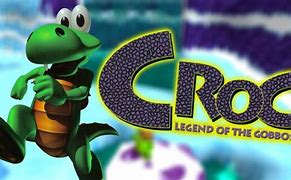
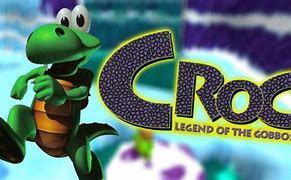
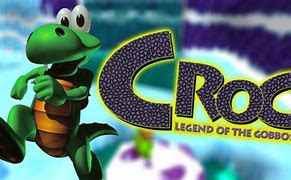
Croc, as a character, is as endearing as any hero could be. A young crocodile with a big heart, Croc was lost as an infant and raised by the gentle Gobbos. Croc’s loyalty to his adopted family is at the center of the plot, and his simple, courageous nature makes him easy for players to root for. While his design is somewhat basic, he has a certain charm with his big green eyes, wide grin, and the ever-present small white tooth sticking out from his lower jaw—a feature that gives him a touch of personality despite the otherwise generic appearance.
Much like many platforming mascots of the era, Croc doesn’t necessarily have a detailed backstory or complex character development. Instead, his character relies on his actions and his unwavering sense of justice. As the protagonist, Croc is tasked with defeating the forces of Baron Dante while solving puzzles, collecting items, and rescuing the Gobbos. It’s a simple but effective narrative that doesn’t overcomplicate things—Croc’s mission is clear, and that’s all you need.
While Croc’s character doesn’t have the iconic status of Mario or Sonic, he embodies the fun and the whimsical energy of the 3D platformer genre. He’s not the most compelling character out there, but he’s definitely one of the more likable ones.
The Gameplay: Platforming with a Punch Croc: Legend
At its heart, Croc: Legend of the Gobbos is a 3D platformer, and its gameplay is structured much like other titles from the era—run, jump, collect, and battle. The gameplay formula is straightforward: you control Croc through a series of levels, each filled with obstacles, enemies, and collectibles. Along the way, Croc must defeat enemies, jump over gaps, solve environmental puzzles, and collect Gobbos. Each stage has its own unique theme, and players must use their wits and reflexes to navigate each one.
The platforming itself is a bit more challenging than one might expect from a game of its era. Croc’s controls are fluid for the most part, though they can feel a bit stiff when performing certain acrobatic maneuvers. The camera angles can also sometimes cause frustration—especially in tight spaces or when trying to judge platforming jumps. The controls are functional but not as polished as in some of the genre’s top-tier titles like Super Mario 64 or Crash Bandicoot.
Despite these minor shortcomings, the core mechanics of Croc’s gameplay are engaging. Players can perform basic actions like jumping, running, and spinning to take out enemies. Croc can also collect magic crystals to power up and unleash special abilities, making the gameplay more dynamic. The game does a solid job of introducing new mechanics as you progress, such as power-ups that allow Croc to perform specific tasks or unlock hidden paths.
One of the standout features of the gameplay is the inclusion of Gobbos, which serve as both collectibles and mission objectives. The main goal in each level is to find and rescue these small, fuzzy creatures. Once you collect a certain number of them, you can progress to the next stage, but rescuing them also rewards you with a sense of accomplishment. The puzzle elements and platforming challenges that arise from rescuing the Gobbos ensure that the gameplay doesn’t feel too repetitive.
As players advance, the game introduces more complex environments with spinning platforms, moving obstacles, and enemy placements that test Croc’s platforming skills. There’s a decent level of challenge here, which makes the game more rewarding for completionists and fans of challenging platformers.
The Art and Sound: A Retro Delight Croc: Legend
The visuals in Croc: Legend of the Gobbos might not have been cutting-edge for 1997, but they are undeniably charming and memorable. The game’s color palette is vibrant, with bright greens, blues, and yellows dominating the various environments. The level designs are intricate, filled with secret areas, hidden paths, and collectibles. The characters, while simple in design, are animated with a level of care that gives the game personality. Croc’s waddling gait and joyful demeanor are easy to appreciate, and the Gobbos, though simplistic in design, are endearing in their own right.
The background music is equally charming, with each level featuring its own theme that suits the environment perfectly. The soundtrack has a playful, upbeat feel that matches the lighthearted nature of the game. The sound effects are nothing too special, but they do the job. Croc’s jumping, spinning, and eating sounds are simple and effective. However, it’s the music that lingers in the player’s memory long after the game is over.
The art and sound of Croc create a welcoming and fun atmosphere that draws players into its colorful world. The game has a certain timeless charm to it, despite being limited by the graphical technology of the late ’90s.
The Boss Battles and Challenges Croc: Legend
No platformer is complete without a series of boss battles, and Croc: Legend of the Gobbos doesn’t disappoint in this regard. Each world is capped off by a challenging boss fight, where Croc must use his platforming skills and abilities to defeat a powerful enemy. These bosses are creative and require the player to think on their feet.
The battles vary in difficulty and style—some require timing and reflexes, while others focus more on problem-solving and figuring out the right pattern to defeat the boss. While the fights are satisfying, they don’t reach the level of complexity or creativity seen in games like Crash Bandicoot or Super Mario 64, but they provide just enough challenge to make them memorable.
The Legacy of Croc: Legend of the Gobbos Croc: Legend
Despite its flaws, Croc: Legend of the Gobbos holds a special place in the hearts of fans who grew up with it. It may not have achieved the same level of success or recognition as its contemporaries, but it offered something unique in its own right. For players looking for a nostalgic trip back to the ’90s, Croc offers a fun, albeit somewhat flawed, adventure.
Over time, the game has gained a cult following. Its unique blend of cute aesthetics, quirky characters, and solid platforming mechanics make it a beloved classic among fans of retro 3D platformers. While it’s not perfect, Croc manages to carve out its own identity in a crowded genre, and that’s something that can’t be overlooked.
Conclusion: A One-Tooth Punch of Fun Croc: Legend
Croc: Legend of the Gobbos is not a flawless masterpiece, but it’s a game that offers genuine charm, challenging platforming, and an inviting world that can still be enjoyed today. It might not have revolutionized the platforming genre or earned the same fame as some of its contemporaries, but it holds a special place in the hearts of those who played it back in the day.
If you’re in the mood for a fun, nostalgic platformer that offers a mix of lighthearted gameplay and occasional difficulty spikes, Croc: Legend of the Gobbos is certainly worth a look. It may not be the sharpest tooth in the 3D platforming crown, but it packs a satisfying punch of fun.