


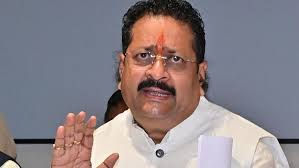
Basanagouda Patil Yatnal
Table of Contents
Road to Perdition: Third Expulsion in 15 Years for Basanagouda Patil Yatnal
Basanagouda Patil Yatnal, a prominent political figure from Karnataka, has found himself at the center of controversy yet again after being expelled from his party for the third time in 15 years. Known for his unapologetically aggressive political style, Yatnal’s expulsions have been a recurring theme in his career, reflecting a broader narrative of his tumultuous relationship with the political establishment. This latest expulsion brings to the fore several key issues, ranging from political loyalty and discipline to the larger picture of internal party politics and governance in India.
A Brief Overview of Basanagouda Patil Yatnal’s Political Career
Yatnal, a former Member of the Legislative Assembly (MLA) and a member of the Bharatiya Janata Party (BJP), has long been an influential figure in Karnataka’s political landscape. His political career has been defined by his contentious and often divisive style. He has served in various roles within the party, and at times, has aligned himself with different factions within the state and national leadership of the BJP. His popularity among certain segments of voters, especially in the Bijapur (Vijayapura) region, is undeniable, but his relationship with party leadership has often been fraught with tension.
Yatnal has been known for his blunt, sometimes abrasive statements. His vocal criticism of rival political figures, coupled with his inflammatory rhetoric, has earned him both admiration and disdain. Over the years, Yatnal has exhibited a flair for controversy, making headlines for his divisive remarks on various issues, often targeting his own party’s leadership or its rivals with equal zeal.
However, despite his controversies, Yatnal has maintained a strong political following, particularly in the northern part of Karnataka, which has helped him secure his place in the political arena for years. His ability to connect with his constituents, combined with his experience, makes him a significant figure in Karnataka’s political equation.
The Series of Expulsions
The recent expulsion of Yatnal from the BJP marks the third time in 15 years that he has been asked to leave a party or political alliance. His history of expulsions is a testimony to his inability to maintain harmony within his party, and it raises questions about his political future and the nature of his political alliances.
The first notable expulsion occurred in the mid-2000s when Yatnal’s vocal opposition to the leadership of then Chief Minister, BS Yeddyurappa, led to a breakdown in his relationship with the party. His statements against the party leadership, accusing them of corruption and mismanagement, were seen as a challenge to the party’s unity. After a period of internal deliberation and external pressure, Yatnal was expelled from the BJP. However, his political influence in the Bijapur region, and his significant local base, enabled him to make a return to the BJP after a few years, when the political situation shifted in his favor.
The second expulsion came about in 2015, after Yatnal once again found himself at odds with the party’s top brass. His vocal opposition to certain party policies and his inability to align with the central leadership resulted in another expulsion, followed by a temporary political isolation. At the time, many analysts viewed Yatnal’s ouster as the result of an internal power struggle within the state unit of the BJP, a power struggle that reflected larger rifts within the party at the national level as well.
Now, in 2025, the third expulsion comes amidst renewed tension between Yatnal and the BJP leadership. The precise reasons for his expulsion remain somewhat unclear, but it seems to stem from a combination of factors. His continued criticism of party policies, his perceived defiance towards the leadership, and his statements on contentious issues, such as the handling of state-level governance and internal BJP matters, all seem to have contributed to his latest ouster. This expulsion once again raises doubts about the party’s ability to deal with internal dissent and enforce party discipline effectively.
Internal Party Politics and the Rise of a ‘Maverick’
Yatnal’s expulsions highlight a critical issue in Indian politics: the often volatile relationship between regional leaders and party high command. While national parties like the BJP claim to operate on principles of discipline and organizational unity, the reality is more complex. Regional leaders, especially those with significant local support, tend to exercise a certain degree of autonomy, and their ability to challenge the central leadership often leads to friction.
In Yatnal’s case, his political style, marked by frequent defiance, has earned him the tag of a ‘maverick’. A maverick is someone who is not afraid to go against the grain, challenge authority, and speak their mind—qualities that can make for a compelling leader but also pose significant challenges to party cohesion. His repeated expulsions point to the tension between the individual and the collective within a political organization. While Yatnal has managed to build a solid base of supporters who admire his fearless attitude, this same trait has made him difficult to manage within a party that values loyalty and discipline.
In the context of the BJP, a party known for its hierarchical structure and top-down approach, figures like Yatnal, who exhibit an independent streak, often find themselves at odds with the central leadership. While the party’s grassroots appeal is important, the leadership also seeks to maintain a level of control and consistency that sometimes clashes with the ambitions or behavior of local leaders.
The Impact of Yatnal’s Expulsion
The expulsion of Basanagouda Patil Yatnal has immediate implications for both the BJP and Karnataka’s political environment. For the BJP, Yatnal’s ouster represents a struggle to maintain party discipline and cohesion. While the BJP is a national party with a centralized leadership structure, it is also a party that draws significant strength from local leaders. Yatnal’s expulsion may create a vacuum in the northern part of Karnataka, especially in the Bijapur region, where his influence is considerable.
For the people of Karnataka, Yatnal’s expulsion could signal a shift in regional politics. The void left by his departure from the BJP may open the door for other political forces to emerge. It is also possible that Yatnal will align himself with another political party, given his extensive network and influence. Alternatively, he may attempt to forge an independent path, rallying his supporters around a new political ideology or platform.
From a broader perspective, Yatnal’s expulsions also underscore the fragile nature of political alliances in India. Loyalty to party leadership, while important, often takes a backseat to personal ambition, regional power dynamics, and the ability to connect with voters. For politicians like Yatnal, maintaining a balance between local influence and party unity has proven difficult, but his political journey also illustrates the shifting allegiances and ideologies that characterize India’s political landscape.
Conclusion
Basanagouda Patil Yatnal’s third expulsion in 15 years is a significant event that adds another chapter to his long and often contentious political career. His repeated expulsions raise important questions about political loyalty, discipline, and the challenges faced by regional leaders in a national party structure. As Karnataka’s political landscape continues to evolve, Yatnal’s future remains uncertain. Whether he returns to the BJP or finds a new political home, his career will undoubtedly continue to be shaped by his ability to navigate the complex dynamics of Indian politics, where individual ambition, party loyalty, and voter sentiment often intersect in unpredictable ways.


