


Supari
Table of Contents
“Supari” for Comedy? Conspiracy Probe After Kunal Kamra Mocks Eknath Shinde
In the world of stand-up comedy, nothing is sacred. Comedians often tread the fine line between humor and offense, using their platforms to push boundaries and comment on current affairs. One comedian, Kunal Kamra, has found himself at the center of a controversy after mocking Maharashtra Chief Minister Eknath Shinde in his signature satirical style. While Kamra’s jokes are a staple for many fans of edgy humor, his recent remarks have stirred up a political storm, with some claiming there may be a deeper conspiracy behind the comic’s biting commentary. The incident, which has now been dubbed “Supari for Comedy,” has led to calls for an investigation, raising pertinent questions about the intersection of comedy, politics, and freedom of expression.
The Incident That Sparked the Storm
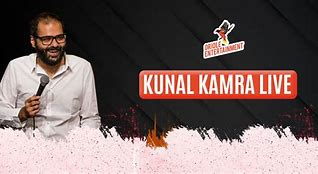
The controversy erupted when Kunal Kamra, known for his acerbic wit and unapologetic stance on political issues, made a remark mocking Maharashtra Chief Minister Eknath Shinde during a live comedy show. Kamra, who has made no secret of his disdain for certain political figures, mocked Shinde’s leadership style, comparing him to a “puppet” in the hands of larger political forces. His comments, delivered in his usual irreverent manner, were met with both laughter from the audience and outrage from political leaders.
What struck a chord with many was Kamra’s use of the term “supari,” which in colloquial Indian parlance refers to a “contract” or “hit” typically assigned by those seeking to target a person. Kamra’s use of the word in the context of Shinde’s political career suggested that the Chief Minister was somehow being controlled or influenced by outside forces, implying a degree of manipulation or conspiracy. In Kamra’s interpretation, Shinde’s rise to power was not a matter of personal achievement but rather the result of a larger political “contract” involving key players in the Maharashtra power game.
While Kamra’s comment was clearly intended as satire, it did not go down well with Shinde’s supporters or certain political factions. The term “supari” in the context of political leadership can carry sinister connotations, often implying that someone has been “bought” or “controlled” in a way that undermines their autonomy. This interpretation led to the belief among some that Kamra’s words crossed the line from political satire to an insinuation of corruption and conspiracy.
A Political Storm Brewing?
Following the performance, reactions from both the political and public spheres were swift and intense. Eknath Shinde’s allies in the Shiv Sena and other political factions quickly condemned Kamra’s comments, accusing him of making baseless allegations and questioning the Chief Minister’s integrity. A few even hinted that Kamra’s remarks were not simply an offhand joke but a part of a larger political conspiracy to destabilize Shinde’s government.
In response to the backlash, there were calls from certain quarters for a formal investigation into the matter, with some suggesting that Kamra’s mockery may be part of a coordinated effort to tarnish Shinde’s reputation. For some, the allegation of a “supari” in a comedy context seemed to invoke deeper fears of a larger narrative of political manipulation at play. Was Kamra simply making a joke, or was there a hidden agenda behind his words? The call for a conspiracy probe suggests that for some, comedy no longer feels like a safe space for satire, but a battleground for political warfare.
Kamra’s Past Controversies
This is not the first time Kunal Kamra has found himself embroiled in controversy. Known for his sharp commentary on social and political issues, Kamra has been a vocal critic of the Indian government and its leadership. His outspoken views, particularly regarding Prime Minister Narendra Modi, have often put him at odds with the ruling party and their supporters. However, Kamra’s brand of humor has garnered significant support from those who value free speech and see his comedy as a necessary check on power.
Kamra has faced numerous legal challenges, including a ban from flying with certain airlines after an altercation with a journalist who was seen as a supporter of the government. His response to these bans and controversies has always been consistent – using humor and satire to mock the political establishment. In many ways, Kamra has become a symbol of resistance in the comedy world, someone who is unafraid to take jabs at those in power, even if it means facing legal or social repercussions.
However, his frequent use of edgy humor has made him a polarizing figure. For some, Kamra’s comedy is a refreshing antidote to the often homogenized political discourse, while for others, it feels like a deliberate attempt to destabilize or delegitimize the government. The “supari” remark, in particular, has struck a nerve because it touches upon the sensitive issue of political manipulation – a theme that resonates deeply in India’s polarized political landscape.
The Role of Humor in Political Discourse
Kamra’s use of satire brings to light an essential question: what is the role of humor in political discourse? In many ways, humor has long been a tool for subverting authority, challenging power structures, and shedding light on the absurdities of the political world. Comedy, at its best, holds a mirror up to society, forcing us to confront uncomfortable truths in a way that is often more palatable because of the laughter it generates.
However, there are limits to humor, especially when it comes to figures in power. As the saying goes, “The higher you rise, the harder you fall.” Public figures, particularly those in positions of authority, are often seen as fair game for satire, but where should the line be drawn? Does a joke that alludes to conspiracy or corruption become more than just a joke, crossing into defamation or spreading false information?
The issue becomes even murkier when comedy is viewed through the lens of politics. In today’s world, humor is increasingly politicized. A joke made by one comedian can be interpreted as a thinly veiled political message, while another comedian might be seen as simply performing for laughs. In this context, Kamra’s comment about Shinde and the use of “supari” might be viewed as a political statement rather than merely a comedic observation.
Is There a Conspiracy?
As the controversy unfolded, the question arose: was Kamra’s remark part of a larger conspiracy to discredit Eknath Shinde? While some may view Kamra’s words as a harmless joke, others see them as a deliberate attempt to sow doubt about the Chief Minister’s legitimacy. The political ramifications of humor cannot be underestimated, especially when it targets a public figure who is already facing significant scrutiny.
On the other hand, Kamra’s supporters argue that comedy is meant to be provocative, and that political figures should be prepared to face criticism, whether in the form of a joke or a serious allegation. Kamra, like many comedians, is simply exercising his right to free speech and using humor as a means of commenting on the political landscape.
In the absence of concrete evidence suggesting a deliberate conspiracy, it is more likely that Kamra’s remarks are just that – a comic’s attempt to highlight the absurdities of political life. Nevertheless, the reaction to his joke demonstrates how seriously humor is taken in today’s politically charged environment.
Conclusion
The “Supari for Comedy” controversy highlights the fraught relationship between comedy, politics, and the public. Kunal Kamra’s mocking remarks about Eknath Shinde have sparked a debate over the role of satire in political discourse, the boundaries of free speech, and the potential consequences of humor in a polarized society. While Kamra’s intention was likely to entertain and provoke thought, the response to his joke underscores the growing tension between comedy and politics. As India’s political landscape continues to evolve, the question of how far comedians can push the envelope remains open, with the boundaries of humor likely to be tested time and again.


