


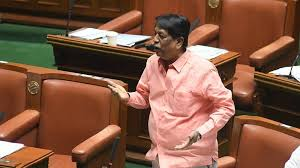
In a recent session of the Karnataka Legislative Assembly, an eyebrow-raising proposal from a senior Member of the Legislative Assembly (MLA) garnered significant attention and sparked political debate. The MLA, representing a prominent political party, has suggested that the government should provide two free bottles of liquor per week to men in Karnataka, a move he argues would help address issues such as addiction while also boosting the state’s revenue.
This unusual recommendation quickly became the center of discussion. Critics and political opponents, particularly from the Congress Party, quickly responded to the proposal with skepticism and humor. The Congress, which is part of the ruling alliance in Karnataka, dismissed the idea as a politically motivated stunt and advised the MLA to “win elections first” before making such proposals.
The senior MLA’s suggestion was part of a larger conversation about the state’s alcohol consumption patterns, tax revenues, and public welfare initiatives. Karnataka, like many states in India, has a complex relationship with alcohol—its consumption is widespread, but the social and health-related issues associated with excessive drinking also present significant challenges.
The Proposal: Free Liquor Bottles for Men
The MLA’s proposal is rooted in the idea of providing free alcohol to reduce the economic burden on families struggling with the high cost of liquor. This would theoretically ensure that families do not need to spend their hard-earned money on alcohol, potentially reducing alcohol-related problems. Additionally, the proposal’s supporters suggest that the state could generate additional revenue from alcohol sales to fund social welfare schemes, creating a balance between accessibility and financial gain.
Critics, however, have voiced concerns that this initiative would only exacerbate existing problems related to alcoholism. Providing free alcohol could lead to an increase in the consumption of liquor and, consequently, social issues such as addiction, domestic violence, and public health concerns. There is a valid fear that such an initiative could normalize excessive drinking and worsen the already strained public healthcare systems by increasing the incidence of alcohol-related diseases.
Congress’ Reaction: Political Snub
The response from the Congress Party was swift and pointed. Party spokespersons ridiculed the proposal and mocked the idea as an impractical, politically charged suggestion. Instead of engaging seriously with the idea, Congress leaders responded with the comment that the MLA should “win the elections first” before even thinking of implementing such measures. This retort implied that the proposal was a populist attempt aimed at securing votes rather than a well-thought-out policy measure.
The Congress argument hinges on the belief that the state government should focus on more pressing issues such as employment, healthcare, education, and infrastructure rather than offering free liquor. By focusing on public health and welfare instead of alcohol subsidies, the Congress Party aligns itself with the larger concerns of societal well-being and long-term prosperity.
In addition, the Congress Party pointed out the potential pitfalls of such an idea, questioning the moral and ethical responsibility of leaders who propose policies that could encourage harmful behaviors. They also noted that the issue of alcohol consumption in the state should be handled with a more comprehensive and thoughtful approach, considering both the economic benefits and the social costs.
The Debate: Revenue vs. Social Responsibility
The MLA’s proposal can be seen as part of a broader debate in Karnataka over how the state should handle alcohol, a major source of revenue. Karnataka is one of the largest consumers of alcohol in India, and the state’s excise department generates significant revenue from liquor sales. It is not surprising, therefore, that some political figures see alcohol distribution as a way to balance state budgets while addressing what they perceive as a widespread issue.
The state’s excise policy has long been a point of contention, with arguments about how the state should handle alcohol taxation and distribution. On the one hand, alcohol sales provide substantial financial support to the state treasury. On the other hand, alcohol consumption is linked to many social issues, including family violence, traffic accidents, and public health problems like liver disease and addiction.
Proponents of the idea argue that by controlling the supply and distribution of alcohol, the state could prevent illegal liquor sales and ensure that the product is sold in a regulated, safe manner. However, critics point out that offering free liquor to the public could inadvertently promote overconsumption and create a scenario where addiction becomes even more prevalent. This could, in turn, lead to greater healthcare costs, domestic strife, and a further burden on social services.
The Larger Political Context
In Karnataka’s volatile political climate, where elections are a constant focal point, this proposal could be seen as a strategic move to court voters. The state has seen its fair share of political volatility, and politicians often come up with bold ideas to attract attention and mobilize voter bases. In this case, the senior MLA’s suggestion could be interpreted as an attempt to appeal to a section of the population who may benefit from a direct, material handout.
However, it is important to remember that the proposal is not necessarily reflective of the official stance of the political party or the ruling government. Often, individual lawmakers will propose policies that may not be fully endorsed by their respective parties. In this case, the Congress Party’s quick dismissal of the proposal suggests that the party does not view it as a serious or viable option.
Public Opinion: Divided Views
Public opinion on such an issue is likely to be divided. Some people may view the idea of free alcohol as a bold move that addresses both financial and social concerns. Others, however, may see it as a reckless attempt to buy votes by pandering to an audience that already has a complicated relationship with alcohol.
While the proposal may generate short-term political gains for the MLA, it could backfire in the long run if it leads to widespread criticism or negative consequences. In an era where public health and responsible governance are major concerns, policies that promote behaviors potentially harmful to the public good tend to face significant backlash.
Conclusion
The proposal of providing two free bottles of liquor to men every week by a senior MLA in Karnataka has sparked a significant political debate, especially among members of the Congress Party. While the MLA views it as a potential revenue-generating scheme and a solution to alcohol-related economic issues, the Congress has dismissed the idea, focusing on more pressing issues such as social welfare and responsible governance. The proposal raises broader questions about the role of alcohol in the state’s economy and the potential dangers of policies that may inadvertently normalize harmful behaviors. Ultimately, the suggestion highlights the complexities of balancing economic growth with social responsibility in policymaking.


