


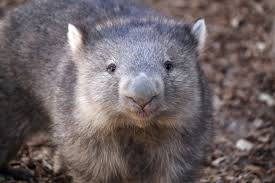
wombats
Table of Contents
Wombats: Australia’s Den-Digging Marsupial
Introduction
Wombats are one of the most unique and beloved creatures of Australia. These sturdy, slow-moving marsupials are known for their burrowing habits, distinctive appearance, and interesting behaviors. Despite their somewhat awkward looks and low-speed lifestyle, wombats are fascinating animals that play an important role in Australia’s ecosystem. In this guide, we will explore wombats in depth: their anatomy, behaviors, habitat, diet, reproduction, and conservation status. Whether you’re an animal lover or simply curious about this endearing marsupial, this guide will give you a comprehensive overview.
1. What are Wombats?
Wombats are terrestrial marsupials belonging to the family Vombatidae. These animals are native to Australia and are known for their compact, robust bodies, short legs, and thick fur. There are three species of wombats:
- Common wombat (Vombatus ursinus): The most widespread species, found in southeastern Australia, including Tasmania.
- Northern hairy-nosed wombat (Lasiorhinus krefftii): One of the rarest species, restricted to small regions of Queensland.
- Southern hairy-nosed wombat (Lasiorhinus latifrons): Found mainly in the southern regions of Australia, including parts of South Australia.
Wombats are part of the order Diprotodontia, which also includes koalas, kangaroos, and possums. Their closest relatives are the koalas, though wombats are much more terrestrial than their arboreal cousins.
2. Physical Features and Adaptations
Wombats have a distinctive and rather stocky build, with short, powerful limbs and a low, barrel-shaped body. Adults typically weigh between 20 and 35 kilograms (44 to 77 pounds), and they measure about one meter (3.3 feet) in length. Their thick fur serves as insulation, especially in colder regions, and they have a tough, leathery backside that helps protect them from predators while they are in their burrows.
Their strong legs and claws are adaptations for digging. Wombats are exceptional diggers, capable of excavating intricate burrow systems. Their claws are especially strong, and their front feet are adapted to help them move soil effectively. A unique feature of wombats is their backward-facing pouch, which prevents dirt from entering while they dig.
3. Behavior and Social Structure
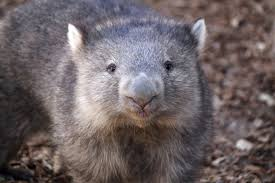
Wombats are generally solitary creatures. They tend to be nocturnal, foraging for food at night and resting in their burrows during the day. Wombats are relatively slow-moving, often taking their time as they roam around searching for food or digging new burrows.
Wombats are territorial animals. They use scent-marking and their burrows to define and defend their territory from other wombats. Their burrow systems can be quite elaborate, with multiple entrances and tunnels. A single wombat can have a network of burrows that may extend over 30 meters (98 feet) in total.
While wombats are solitary in terms of social structure, they communicate with each other through scent marking and occasional vocalizations. These vocalizations include grunts, growls, and other sounds, especially when they feel threatened or during encounters with other wombats.
4. Habitat and Range
Wombats are found across a wide range of habitats in Australia, from woodlands and forests to grasslands and semi-arid regions. They are primarily burrowing animals and prefer to live in areas with soft, easily dug soils. Their burrows can be found in a variety of environments, from coastal plains to mountainous regions.
The common wombat is found in southeastern Australia and Tasmania, whereas the northern hairy-nosed wombat is extremely rare and lives in a small region of Queensland, within a protected area. The southern hairy-nosed wombat has a range that covers the southern parts of Australia, including South Australia, where it inhabits dry and semi-arid regions.
Wombats are well adapted to their habitats, capable of surviving in a variety of climates. They thrive in areas with dense vegetation and moderate temperatures, though they can also handle harsher environments with little water.
5. Diet and Feeding Habits
Wombats are herbivores, primarily feeding on grasses, roots, and other plant material. Their diet is high in fiber and low in moisture, which suits their digestive system. Wombats have a relatively slow metabolic rate, and it can take several days for food to pass through their digestive system. In fact, their digestion is so slow that it can take up to 14 days to process a meal, and as a result, wombats produce very dry, cube-shaped feces.
The slow digestion allows wombats to extract as much moisture and nutrients as possible from their food, which is essential in the often-dry environments they inhabit. Their large, flat molars are well-suited to grinding tough plant material, and they will often chew on vegetation throughout the day.
Wombats are also known to occasionally eat the roots of certain plants, which they dig up using their powerful claws. Their burrows can sometimes disturb the root systems of local vegetation, but they are generally not considered significant agricultural pests.
6. Reproduction and Lifespan
Wombats have a unique reproductive system as marsupials. After mating, the female wombat carries her baby, called a joey, in her backward-facing pouch. The gestation period for a wombat is around 20 to 30 days, after which the tiny, underdeveloped joey crawls into the pouch to continue developing. The joey stays in the pouch for about six to seven months, after which it begins to emerge and starts nibbling on solid food while still nursing.
Wombats reach sexual maturity around two years of age, and they have a lifespan of 5 to 15 years in the wild. They tend to live longer in captivity, with some individuals reaching up to 20 years.
7. Conservation Status
While wombats are generally not considered endangered, their populations face a number of threats. The northern hairy-nosed wombat, in particular, is critically endangered, with fewer than 250 individuals remaining in the wild. Conservation efforts are in place to protect this species, including habitat restoration and the establishment of protected areas.
The common wombat, however, is listed as least concern by the International Union for Conservation of Nature (IUCN). Despite this, their populations are still vulnerable to habitat loss due to land clearing, predation by introduced species (such as foxes and dogs), and vehicle collisions.
Conservation programs focusing on wombat protection include creating wildlife corridors, preventing roadkill, and controlling introduced predators. In addition, some areas are implementing wombat management practices to ensure sustainable populations, especially for the rarer species.
8. Interesting Facts
- Cube-shaped poop: One of the most well-known and strange facts about wombats is their cube-shaped poop. This unique trait helps prevent the feces from rolling away and allows wombats to mark their territory more effectively.
- Speed: Despite their slow, lumbering appearance, wombats are capable of running at speeds of up to 40 km/h (25 mph) for short bursts when threatened.
- Burrow builders: Wombats are skilled architects, and their burrows can be very complex, with multiple chambers and exits. They may even “inherit” and expand on burrows dug by previous wombats.
Conclusion
Wombats are one of Australia’s most intriguing and endearing marsupials. Their burrowing lifestyle, slow pace, and unique physical traits make them stand out among the diverse range of Australian wildlife. Whether they are digging extensive burrow systems, grazing on grasses, or living solitary lives in the wild, wombats are a testament to the evolutionary creativity of nature. Despite facing some conservation challenges, they remain a symbol of Australia’s unique fauna, captivating wildlife enthusiasts and researchers alike.
Understanding wombats and their role in the ecosystem is important, not only to protect these fascinating creatures but also to ensure the preservation of the habitats that sustain them for future generations.


