


Table of Contents
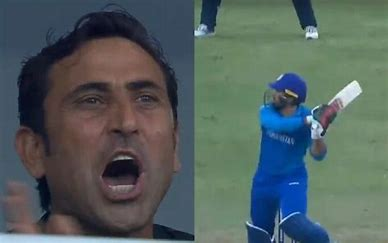
Younis Khan Applauds Mohammad Nabi’s Late Acceleration Vs England: A Masterclass in Finishing
In the world of cricket, a player’s ability to finish an innings with explosive power is as valuable as it is rare. It’s one thing to build an innings and keep a steady tempo, but quite another to unleash an onslaught in the dying moments of a match. The pressure of chasing big totals or setting one requires immense skill, but more importantly, it demands temperament, technique, and the mental fortitude to handle the tension that accompanies the final overs.
In a thrilling encounter during a recent ODI between Afghanistan and England, it was Mohammad Nabi, the Afghan all-rounder, who emerged as the hero with a late acceleration that left cricket enthusiasts in awe. His performance not only helped Afghanistan finish with a competitive total but also earned praise from one of the most respected names in the cricketing world: Younis Khan, the former Pakistani batsman and one of the game’s finest exponents of batting technique.
Setting the Scene: The Importance of Nabi’s Knock
The match between Afghanistan and England in the 2025 ICC Champions Trophy was shaping up to be a tight affair. Afghanistan, though an emerging force in international cricket, were up against the highly skilled and experienced English team. Afghanistan’s top order had seen some early breakthroughs, and at one point, they were at a risk of being bowled out for a subpar total. However, the middle order stood firm, with Nabi at the helm. He was tasked with the critical job of leading his side to a decent total, one that would be defendable against England’s formidable batting lineup.
At the start of his innings, Nabi was cautious, focused on building a foundation after Afghanistan’s top-order collapse. His approach was methodical and steady, as he worked the ball into gaps and rotated strike with ease. However, as the innings neared its final stages, Nabi shifted gears with remarkable intent. His late surge was a masterclass in finishing an innings, with aggressive shots that completely changed the complexion of Afghanistan’s total.
Nabi’s Late Acceleration: The Turning Point
As the game progressed into the final 10 overs, Afghanistan was in dire need of a quick acceleration to set a challenging total. Nabi took charge and began to dispatch the English bowlers to all corners of the ground. Whether it was a fierce pull shot off the fast bowlers or a precision-driven drive through the covers, Nabi’s intent was clear—he wasn’t just looking for singles or two’s, but was aiming to hit boundaries and maximize the strike rate in a bid to boost Afghanistan’s total.
What made his performance so impressive was not just the power or the timing of his shots, but the timing itself. Nabi played with the kind of calm composure that belied the pressure of the situation. Despite the mounting tension, he did not rush his shots. Each shot seemed calculated, yet aggressive enough to keep the scoreboard ticking. As he launched into England’s bowlers in the final overs, he quickly transformed from a steady accumulator of runs into a dominant figure in the middle.
His key boundaries came off Adil Rashid and Sam Curran, two of England’s premier bowlers, highlighting his ability to take on the best. One of the most notable moments was a stunning six over long-on off Rashid, which showcased his strength and technical ability. His ability to find the right timing, combined with a deep understanding of the game’s nuances, was evident in every stroke he played. Nabi’s efforts ensured Afghanistan finished their innings with a total of 325/7, a score that, while challenging, was certainly achievable for the experienced English side.
Younis Khan’s Praise: Acknowledging Nabi’s Composure
Younis Khan, known for his elegant batting and understanding of the mental and technical aspects of the game, was full of praise for Nabi’s efforts after the match. Khan, who was a pivotal figure in Pakistan’s success over the years, acknowledged how Nabi’s late surge demonstrated the traits that separate good players from great ones: mental composure, adaptability, and the ability to recognize the right moment to attack.
In his post-match commentary, Younis Khan highlighted several key aspects of Nabi’s innings that made it so special. He praised Nabi’s temperament in the face of adversity, noting how he had controlled his aggression early on before unleashing a fury of boundaries as the match entered its closing stages. For Khan, this showed an understanding of the match situation—knowing when to bide his time and when to take the attack to the opposition.
Khan also commended Nabi’s ability to handle pressure. In matches where the required run rate climbs, many players can become desperate, trying too hard to hit boundaries, often leading to reckless dismissals. Nabi, however, was able to hit those crucial boundaries without losing his calm. His strokeplay in the final overs was an example of someone who has not only mastered the technical side of batting but has also understood the psychology behind pacing an innings, especially in the closing moments.
Key Technical Strengths: A Lesson for Young Players
Younis Khan’s admiration for Nabi’s batting extended beyond his finishing abilities. Khan emphasized several technical aspects that young cricketers could learn from Nabi’s approach. For example, Nabi’s footwork against spin was exemplary. Against Rashid, one of the world’s premier leg spinners, Nabi showed remarkable ability to use his feet and place the ball into gaps, denying the bowler any opportunity to settle. His timing and placement were spot-on, and even when facing pace, he exhibited a calm head and found gaps in the field.
Additionally, Khan appreciated how Nabi managed his placement. Instead of solely relying on brute force, Nabi was able to find gaps in the field, striking the ball into areas where the fielders were out of position. This was key in helping him accumulate boundaries and rotate the strike when necessary.
Moreover, Khan also emphasized Nabi’s ability to read the field placements and adjust his shot selection accordingly. With fielders placed in specific zones, Nabi knew where to direct his shots, ensuring that he maximized the available space. This is an aspect of batting that separates good players from the elite, and it was a hallmark of Nabi’s late assault.
Impact of Nabi’s Innings on Afghanistan’s Strategy
Nabi’s late acceleration had more than just a statistical impact; it reshaped Afghanistan’s entire approach to the game. Prior to his outburst, Afghanistan had looked like they might finish with a modest total, making it difficult to challenge a strong England team. But Nabi’s performance not only put Afghanistan in a competitive position but also provided a psychological advantage. His ability to take on high-quality bowlers like Rashid and Curran would have sent a message to the English team—Afghanistan was not here just to compete, but to win.
As the game progressed into England’s chase, the pressure was now on them to match the 325 runs set by Afghanistan. The required rate was manageable but challenging, especially with the spin threat that Afghanistan possessed. Nabi’s contributions with the bat added to Afghanistan’s sense of belief, and his performance underlined the importance of finishing strong, a lesson that many modern-day cricketers could benefit from.
Conclusion: A Finishing Masterclass
Mohammad Nabi’s late acceleration against England was a standout performance in a high-stakes match. It demonstrated not only his technical skill but also his cricketing acumen and mental toughness. His partnership with the bat turned what seemed like a decent total into a truly challenging one. Younis Khan’s praise for Nabi’s performance was a testament to the fact that this kind of innings requires more than just raw power; it requires a blend of intelligence, calmness, and execution.
For young cricketers, Nabi’s performance against England serves as a masterclass in finishing an innings. It’s not just about hitting boundaries at will, but about knowing when to accelerate, how to manage pressure, and how to play the situation. Nabi showed that in cricket, as in life, knowing when to attack and when to defend is often the difference between victory and defeat. His contribution in this match will go down as one of the most mature and impactful finishing innings in recent ODI history.


