


Table of Contents
Phil Donahue: A Comprehensive Overview
Early Life and Education
Phil Donahue was born Charles Philip Donahue on December 21, 1935, in Cleveland, Ohio. He grew up in a working-class family; his father was a salesman and his mother was a homemaker. Donahue attended St. Edward High School, where he was actively involved in school activities. After graduating, he enrolled at the University of Notre Dame, where he earned a degree in Business Administration. His time at Notre Dame was formative, instilling in him the confidence and skills that would later fuel his successful career in media.
Early Career and Television Beginnings
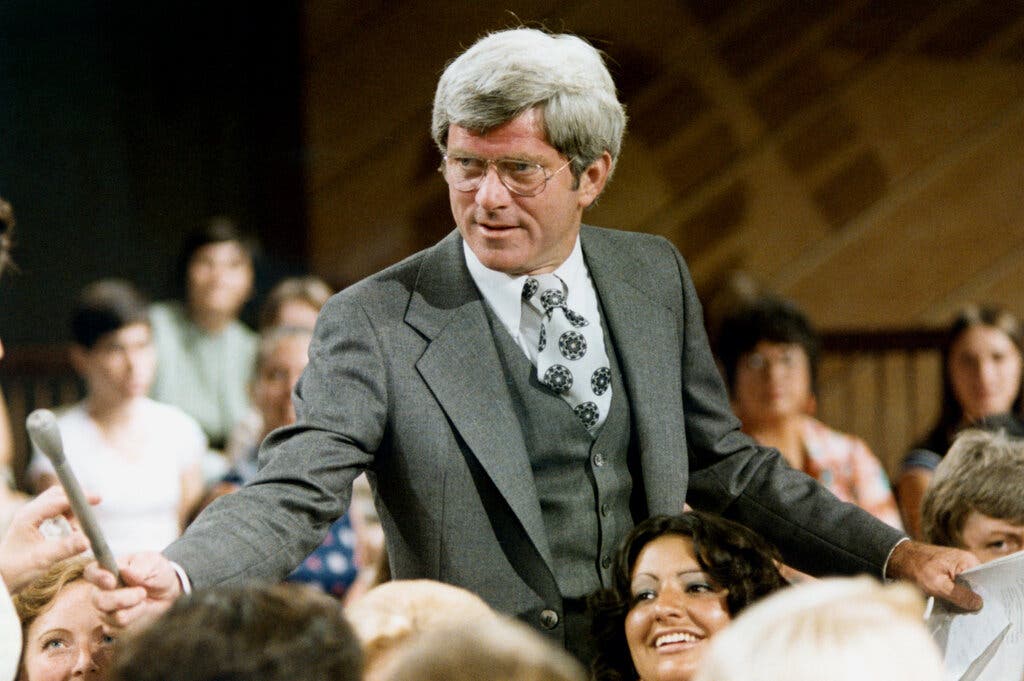
Donahue’s career began in radio, where he honed his skills as a broadcaster. His early work in radio paved the way for his transition to television. He started working at local TV stations in Ohio, where his dynamic on-air presence quickly gained attention. His breakthrough came in 1967 when he launched “The Phil Donahue Show,” initially broadcast from Dayton, Ohio. The show was a departure from traditional talk shows of the time, focusing on real-life issues, social concerns, and audience interaction.
Rise to National Fame
In 1970, Donahue’s show was picked up by national syndication, marking the beginning of his rise to national prominence. “The Phil Donahue Show” became a trailblazer in the talk show genre, setting new standards for content and format. Donahue’s approach was groundbreaking; he engaged his audience in open and often controversial discussions on a wide range of topics, including politics, social issues, and personal experiences.
Donahue’s format was revolutionary. He moved away from the more scripted and sensationalist approach of earlier talk shows, opting instead for a more spontaneous and interactive style. His show became a platform for guests to share personal stories and discuss pressing issues, often leading to lively and sometimes heated debates. This approach helped to establish talk television as a significant and influential medium.
Influences and Innovations
Phil Donahue’s show was notable for several innovations that influenced the talk show genre. His willingness to tackle controversial and taboo topics paved the way for more open discussions on television. He was also among the first to incorporate live audience participation, creating a more dynamic and engaging format. Donahue’s emphasis on authenticity and real-life experiences resonated with viewers, establishing a new model for talk shows that many later programs would follow.
Social and Political Impact
Donahue’s influence extended beyond television. His show was known for addressing social and political issues, often giving a voice to marginalized and underrepresented groups. He tackled topics such as women’s rights, LGBTQ+ issues, and anti-war sentiments, reflecting the changing social landscape of America. His willingness to address these issues head-on contributed to important public conversations and influenced societal attitudes.
For instance, his show featured debates and discussions about the Vietnam War, civil rights, and women’s liberation, providing a platform for diverse viewpoints and contributing to public discourse. Donahue’s focus on social justice and his commitment to presenting multiple perspectives helped to shape public opinion and foster greater understanding of complex issues.
Awards and Recognition
Phil Donahue’s contributions to television and media earned him numerous accolades. Over his career, he received several Daytime Emmy Awards, including the prestigious Daytime Emmy for Outstanding Talk Show Host. His impact on the talk show genre was widely recognized, and he was praised for his innovative approach and commitment to addressing important issues.
In addition to his Daytime Emmy Awards, Donahue was honored with various other awards and recognitions, including the Peabody Award for excellence in broadcasting. His influence extended beyond the realm of talk shows, as he became a respected figure in American media and a pioneer in the genre.
Transition and Later Career
After a successful run that lasted over 26 years, Donahue retired from his show in 1996. However, his career did not end there. He continued to be active in the media world, hosting a series of specials and programs, including a stint on MSNBC in the early 2000s. His later work continued to reflect his commitment to addressing important social issues and engaging in thoughtful discussions.
Donahue also ventured into filmmaking and writing. He authored several books, including “Donahue: My Own Story” and “The Human Comedy,” which reflect his experiences and insights gained throughout his career. His work in these areas further demonstrated his dedication to exploring and communicating complex social and political issues.
Legacy and Influence
Phil Donahue’s legacy in American television is significant. His pioneering approach to talk shows set a new standard for the genre, influencing countless other programs and hosts. His emphasis on genuine dialogue and engagement with the audience helped to transform talk television into a platform for serious discussion and social commentary.
Donahue’s impact is also evident in the way he addressed social issues and provided a forum for diverse voices. His show played a crucial role in shaping public discourse and fostering a greater understanding of complex societal issues. As a result, he is remembered not only as a successful television host but also as a trailblazer who helped to redefine the boundaries of talk television.
Conclusion
Phil Donahue’s contributions to television and media are enduring. From his early career in radio to his groundbreaking work on “The Phil Donahue Show,” he demonstrated a commitment to engaging with real-life issues and fostering open dialogue. His innovations in the talk show format, along with his focus on social and political issues, have left a lasting impact on American television. As a pioneer in the genre, Donahue’s influence continues to be felt, and his legacy remains an important part of the history of media and broadcasting.


